


CHÂTEAU DES FOUGIS


Historical Overview
‘Tradition holds that in the 15th century, the Fougis estate was a hunting rendezvous for the Bourbons. In 1495, Duke Charles III is seen settling accounts with Hughes Le Long, Lord of Fougis and Grand Provost of the Duke’s Hunting. Prior to this date, the lordship of Fougis is mentioned in 1410 in a census rendered by Pierre Bodet to Guichard Dauphin, Lord of Jaligny. However, the Le Long family had been in possession of Fougis since 1461, when Hugonin Le Long, squire and Grand Provost of the Hunting for Pierre II de Bourbon, held the estate. The Le Long family remained owners of Fougis until 1727, when the fiefdom was bequeathed to a nephew, Jean de Berthier de Bizy. Descendants retained it until the Revolution. It was subsequently purchased in 1802 by Antoine Clayeux, whose family still owns it today.
Although reconstructed at the end of the 16th century (a classical-style gateway is dated 1593), Fougis still features arrow slits that are more decorative than functional. Nicolas de Nicolay describes it in 1569 as a “strong castle, land, and lordship”…
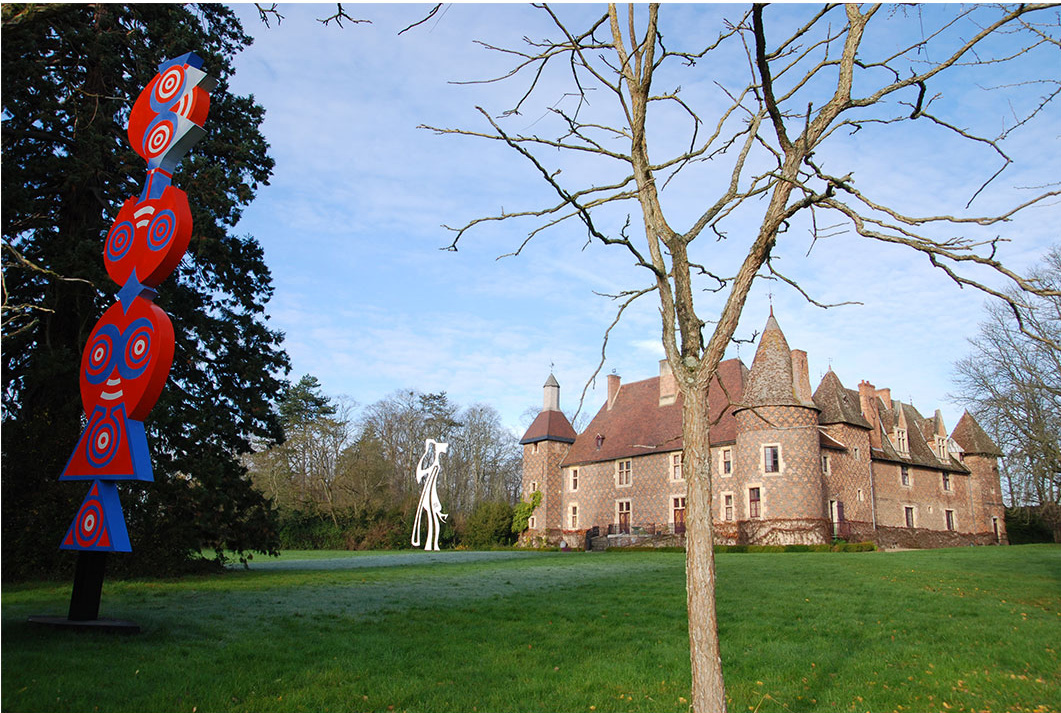
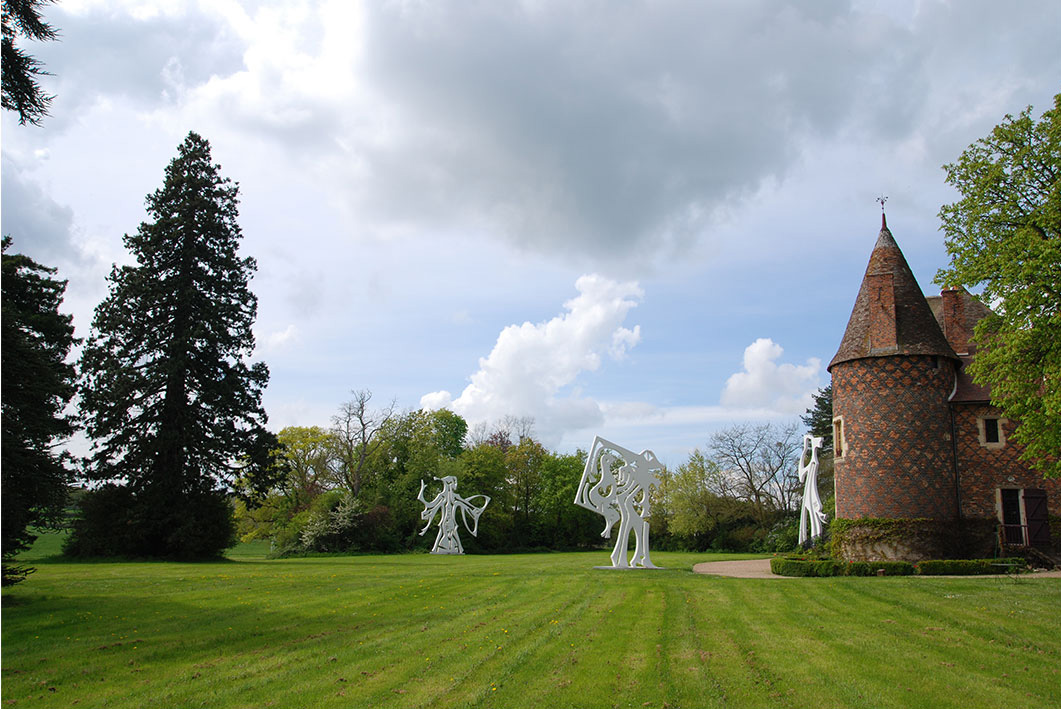
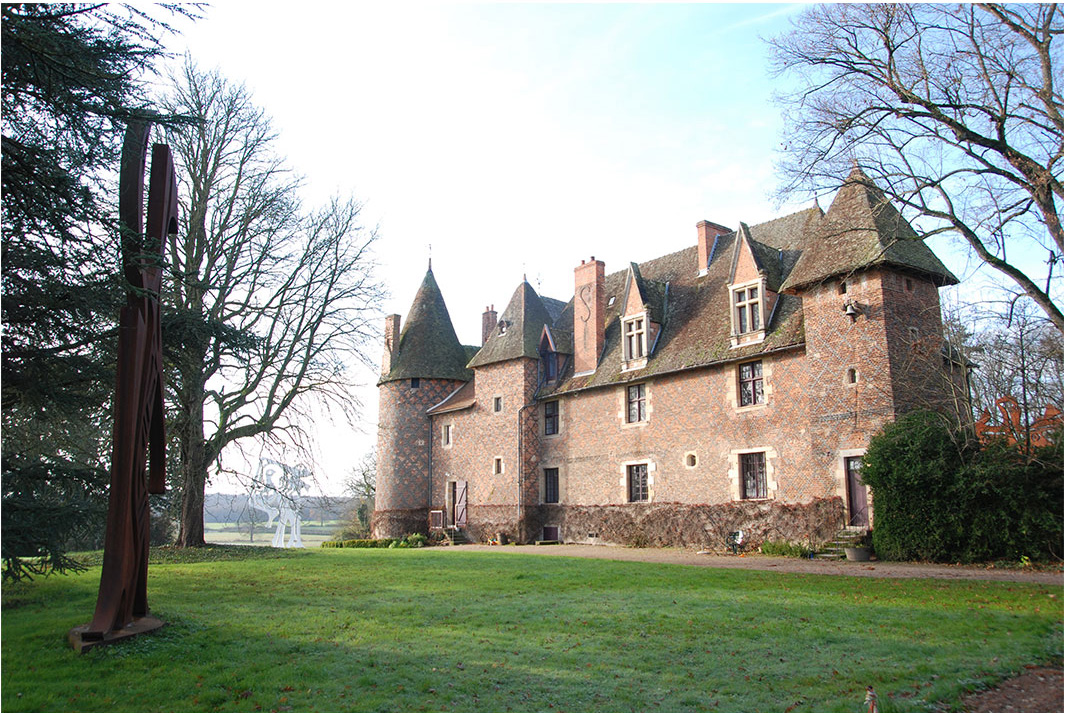
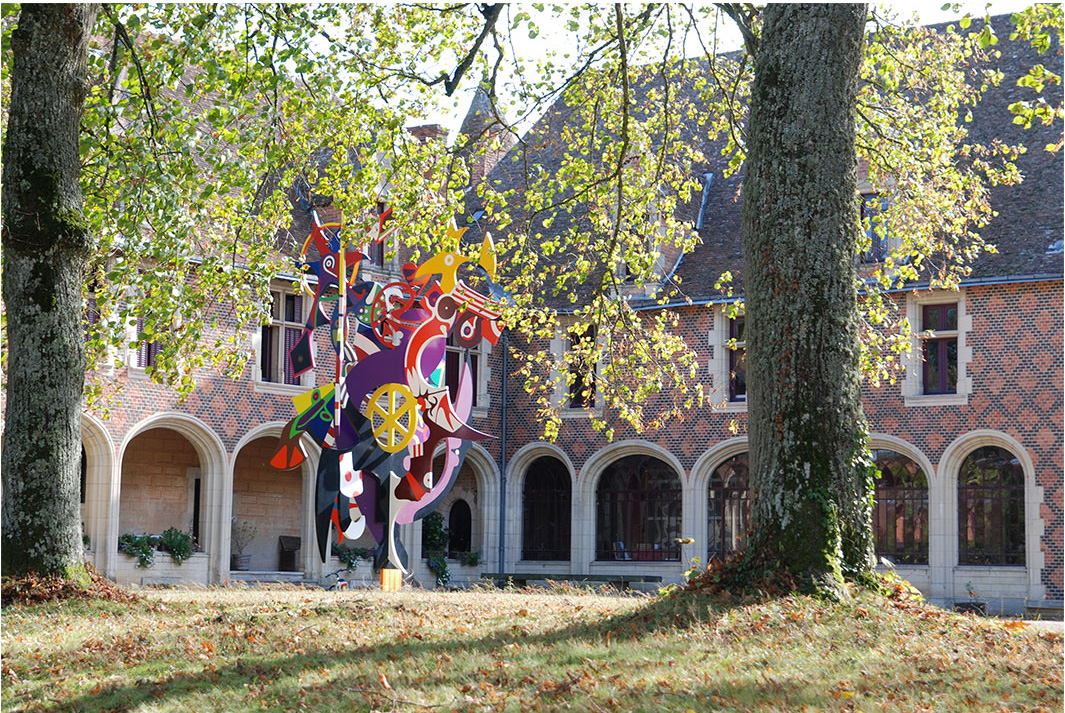
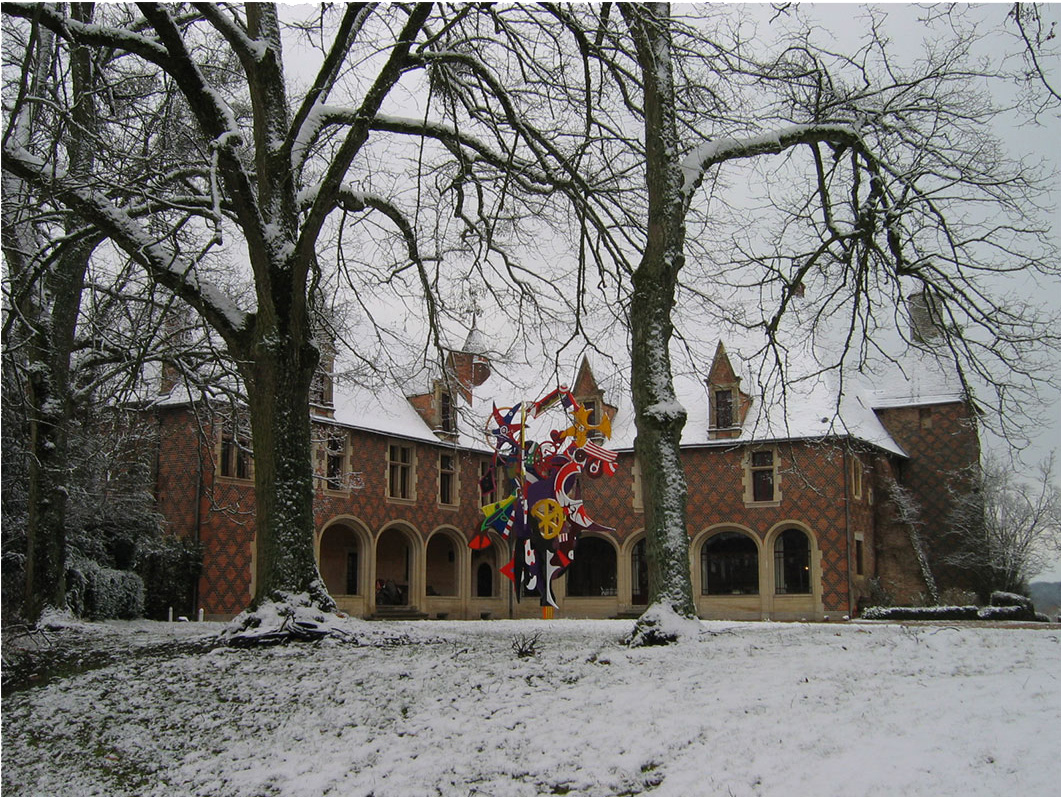
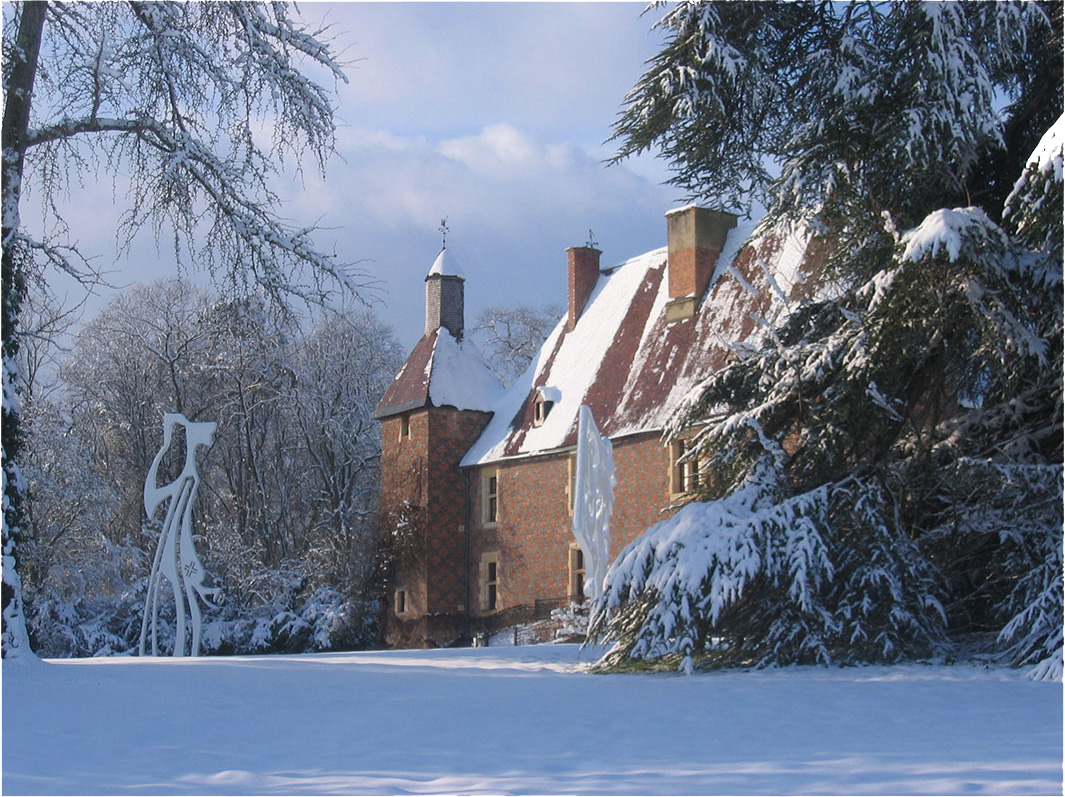
The château is composed of a main rectangular building, flanked by two square towers on its southwest and northeast corners, and a round tower to the southeast. A second perpendicular wing to the north is also flanked by another square tower on its east corner. The walls are made of red and dark brown brickwork, paired to form lozenge patterns. The openings are framed with white limestone. The north façade and some windows to the other sides were modified throughout the end of the 19th century.’
— R. Germain & coll., ‘Châteaux, fiefs en Bourbonnais’, 2004, Éditions De Borée, Sayat, ISBN 2‑84494‑199‑0, pp. 539‑540
Further Reading
A historical account of Les Fougis, with reviewed sources, can be found in the catalogue of the sculpture park, published by Editions Axel Menges, Stuttgart/London: ISBN 978‑3‑932565‑84‑7.
It may be ordered here.
Time Capsule
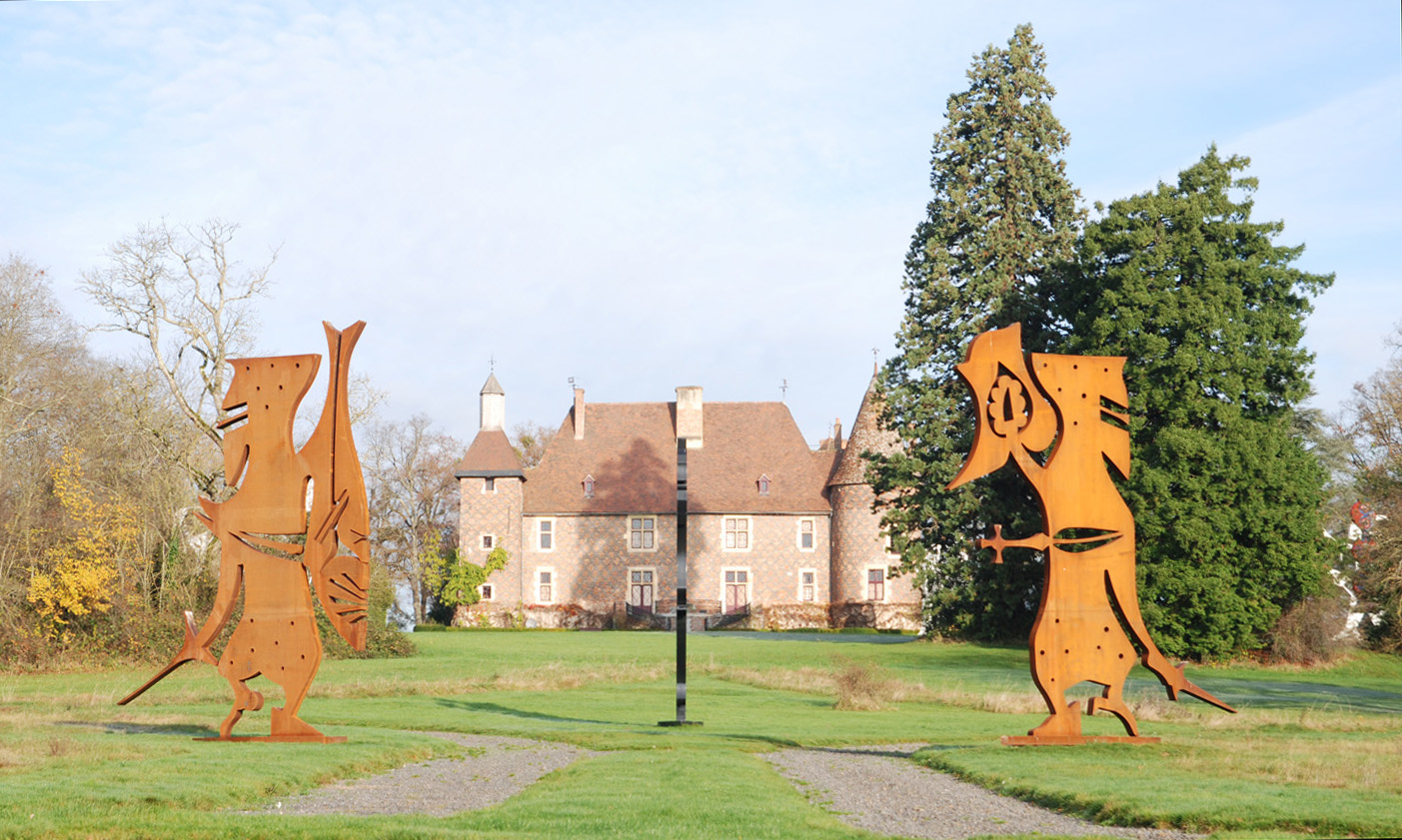
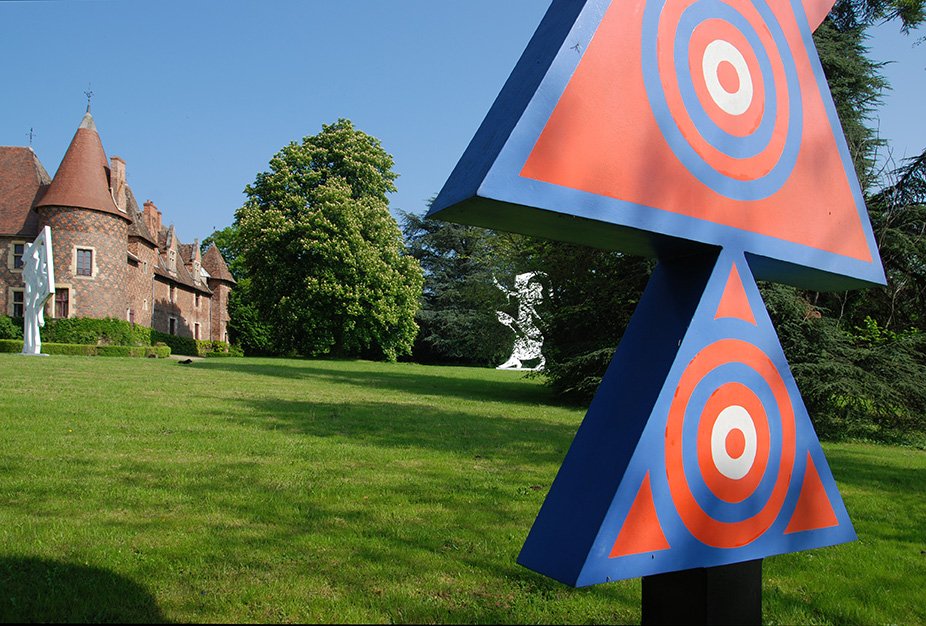
By 2011, Erich Engelbrecht, in collaboration with the architect João de A. Vares, his son‑in‑law, had developed a sculpture park comprising 29 monumental steel sculptures, some with raw finish and others polychrome. The project was realised in several phases on the grounds of the Château des Fougis, which the artist acquired in 2001.
The estate was acquired to establish a permanent site in France – complementary to his atelier and exhibition building in Melle, Germany – for the presentation and spatial staging of his work. Central to the project were the artistic conception of the park and the integration of the sculptures into the landscape; residential use of the estate remained of secondary importance.
For several years, the artist’s widow and a number of other family members – including the present rights holder – have been unable to stay at the sculpture park at Fougis from time to time or to welcome visitors there. The family now resides in Germany, where they continue to receive art enthusiasts and present works from all periods in the artist’s former workshop in Melle, the birthplace of Erich Engelbrecht’s art.
In the main wing of the château, Mrs Waltraud Engelbrecht – the artist’s widow and first executor of his estate – had, together with Erich Engelbrecht, established a second exhibition featuring works held in her private collection since 1993–1994. On display are large‑format tapestries, oil paintings, small steel sculptures, and graphic works by the artist.
This indoor exhibition was and remains accessible exclusively by invitation from, or prior appointment with, the rights holder. It is currently closed until further notice due to the circumstances mentioned above.
The same applies to the outdoor exhibition. No other person, association, or entity has been authorised by the rights holder to open the exhibitions to the public, organise visits or tours, charge admission fees, or commercially exploit either the exhibitions or the artworks.
Any website, platform, or service offering tickets, promoting visits, or claiming to provide access to the exhibitions at Fougis does so without the consent of the rights holder and in infringement of the rights holder’s intellectual property rights.
Ongoing Cultural Activities
Until the temporary departure of the aforementioned persons from Fougis, cultural activities included the international music and dance festival ‘Festiv’ Allier’, held irregularly in August from 2007 onwards. Some of these events were held in the ‘Haras des Fougis’ – equipped with a professional kitchen, a multi-purpose room with mezzanine, and a large marquee.
Accommodation that was previously offered to exhibition visitors in buildings on or near the sculpture park grounds, after being restored and equipped by Mrs Engelbrecht, remains – for the above reasons – temporarily closed.